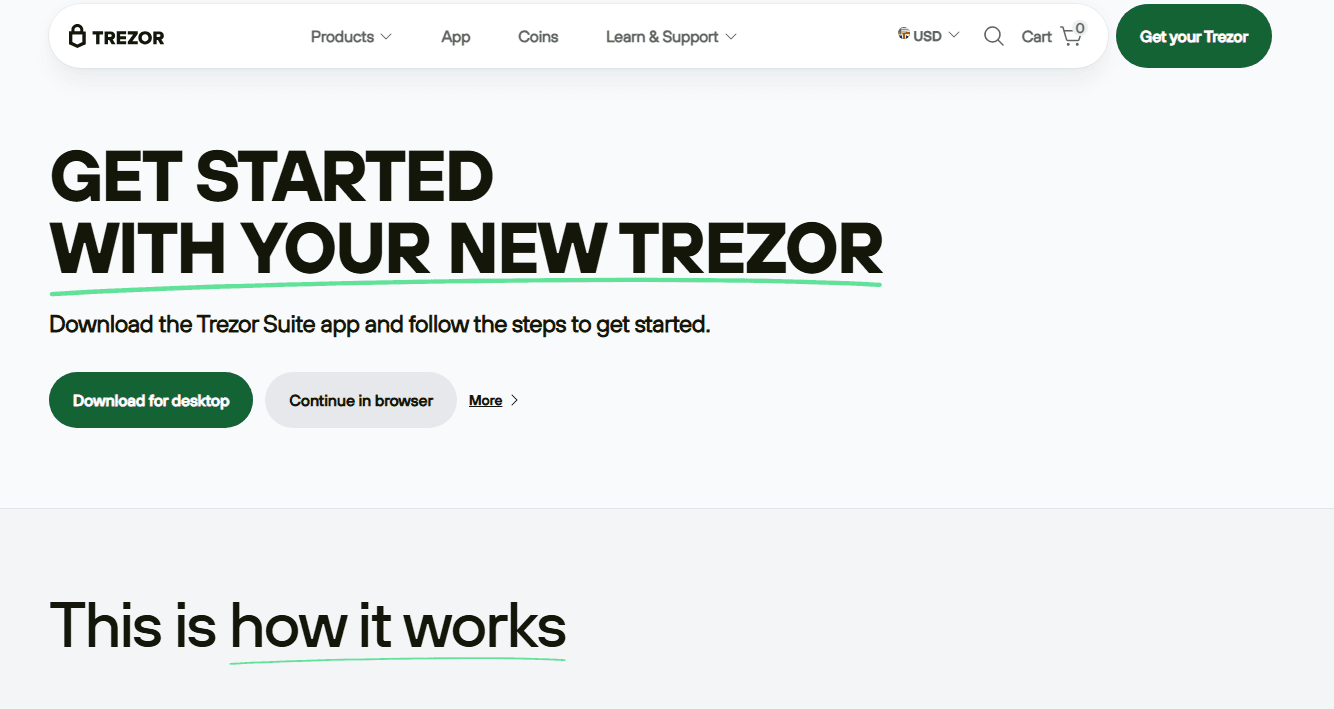
Trezor.io/start: The Complete Guide to Setting Up Your Trezor Hardware Wallet
Trezor.io/start is the official starting point for anyone setting up a Trezor hardware wallet. It provides step-by-step guidance to ensure that users initialize their device safely, protect their cryptocurrency, and fully understand how to manage their assets securely. With an emphasis on self-custody and security, Trezor.io/start helps users maintain complete control over their private keys and reduce risks from online threats.
Hardware wallets like Trezor are essential tools for cryptocurrency owners who want to protect their assets from hacking, phishing, and other cyber threats. Trezor.io/start ensures that every user begins with the correct security practices and fully understands the responsibilities of owning a hardware wallet.
Understanding Trezor.io/start
Trezor.io/start is the official setup guide for Trezor devices. It walks users through initializing the wallet, creating a secure PIN, generating and storing the recovery seed, and connecting to Trezor Suite. This structured process ensures that users set up their wallets correctly, minimizing the risk of mistakes that could compromise security.
Unlike software wallets that store private keys on an internet-connected device, Trezor stores private keys offline. Trezor.io/start educates users on why this separation is essential and how to safely manage their assets in a self-custody environment.
Why Trezor.io/start Is Critical
Setting up a hardware wallet correctly is a crucial step in cryptocurrency management. Mistakes during setup, such as losing the recovery seed or choosing a weak PIN, can result in permanent loss of funds.
Trezor.io/start reduces these risks by providing detailed instructions and highlighting the importance of security. Following the official guide ensures that users understand each step and start their cryptocurrency journey with confidence.
Unboxing and Inspecting the Device
The Trezor.io/start process begins with unboxing the hardware wallet. Users are encouraged to inspect the packaging and device carefully to ensure there are no signs of tampering or damage.
Checking the device’s physical integrity is a critical first step. A genuine, untampered Trezor is necessary for securing private keys and managing digital assets safely.
Powering On and Navigating the Device
Once the device is inspected, users power on the Trezor. Trezor.io/start provides instructions for navigating the device interface using the built-in buttons.
Understanding navigation is important because all sensitive actions, such as approving transactions and confirming security settings, must be performed directly on the hardware wallet.
Creating a Secure PIN
Creating a secure PIN is one of the first major security steps in Trezor.io/start. The PIN protects the device from unauthorized access. Every time the Trezor is connected, users must enter this PIN to use the wallet.
Trezor.io/start recommends choosing a PIN that is difficult to guess but easy to remember. A strong PIN adds an essential layer of protection, ensuring that the wallet remains secure even if the device is lost or stolen.
Generating the Recovery Seed
A recovery seed is a sequence of words that represents the private keys stored on the Trezor device. Trezor.io/start guides users through generating this seed during setup.
The recovery seed is the only way to recover funds if the hardware wallet is lost, stolen, or damaged. Trezor.io/start emphasizes that users must write down the seed carefully and store it securely offline.
Safeguarding the Recovery Seed
Protecting the recovery seed is critical. Anyone with access to the seed can take control of all cryptocurrency associated with the wallet.
Trezor.io/start instructs users to store the recovery seed in a safe location, away from digital devices, and to avoid sharing it with anyone. Offline storage is essential to maintain security.
Confirming the Recovery Seed
To ensure accuracy, Trezor.io/start requires users to confirm their recovery seed by entering selected words in the correct order.
This verification step ensures that the seed has been recorded correctly and reduces the risk of errors that could prevent future access to funds.
Connecting to Trezor Suite
Once the device is secured, Trezor.io/start guides users in connecting the hardware wallet to Trezor Suite. Trezor Suite is the interface for managing cryptocurrency accounts, viewing balances, and initiating transactions.
While Trezor Suite provides a convenient interface, the private keys remain securely stored on the hardware wallet. All critical actions, including sending funds, must be approved on the device itself.
Verifying Device Authenticity
Trezor.io/start includes steps to verify that the hardware wallet is genuine. This ensures that the device has not been tampered with and meets Trezor’s security standards.
Verifying the device provides assurance that the wallet is safe and that the private keys stored on it are fully protected.
Adding Cryptocurrency Accounts
After setup, users can add cryptocurrency accounts through Trezor Suite. Trezor.io/start explains that these accounts are derived from the recovery seed, which acts as a secure master backup.
Users can manage multiple cryptocurrencies and accounts while relying on a single secure recovery seed, simplifying long-term asset management.
Understanding Self-Custody
Trezor.io/start emphasizes the concept of self-custody. Unlike custodial services where third parties control private keys, Trezor hardware wallets give users full ownership and control of their cryptocurrency.
With this control comes responsibility. Trezor.io/start ensures users understand that protecting the device, PIN, and recovery seed is critical to maintaining access to their funds.
Security Best Practices
Security is a key theme of Trezor.io/start. Users are advised to:
Verify transaction details on the hardware wallet screen before approving
Keep the device physically secure at all times
Avoid phishing attempts and suspicious links
Regularly update the device firmware for ongoing protection
These practices help prevent common security threats and ensure that users maintain control over their digital assets.
Managing Assets After Setup
Once setup is complete, users can manage cryptocurrency securely. They can receive funds, monitor balances, and send transactions.
Every outgoing transaction must be approved on the hardware wallet, protecting funds even if the computer or interface is compromised.
Long-Term Device Maintenance
Trezor.io/start also guides users on long-term device care. This includes:
Safely storing the hardware wallet
Keeping firmware up to date
Avoiding exposure to environmental hazards
Periodically reviewing security practices
Proper maintenance ensures that the wallet remains secure and functional for years to come.
Common Setup Challenges
First-time users may encounter minor challenges, such as navigating the device interface or connecting to Trezor Suite. Trezor.io/start is designed to be clear and methodical, helping users complete setup correctly without rushing.
Patience and careful attention are encouraged to avoid mistakes during this critical stage.
Benefits of Following Trezor.io/start
Following Trezor.io/start ensures that users start with strong security habits, confidence in their device, and a clear understanding of self-custody.
The structured setup process reduces risks, improves knowledge, and supports responsible management of cryptocurrency assets.
Trezor.io/start Compared to Improvised Setup
Skipping or improvising the setup process can lead to security errors. Trezor.io/start provides a trusted, official path to ensure consistency, reliability, and safety from the beginning.
Conclusion
Trezor.io/start is the essential first step for anyone using a Trezor hardware wallet. It provides a secure, step-by-step setup process that emphasizes self-custody, device protection, and user responsibility.
By guiding users through device initialization, PIN creation, recovery seed generation, and connection to Trezor Suite, Trezor.io/start ensures that cryptocurrency assets are protected from the outset. Following this official guide allows users to manage their digital assets safely, confidently, and with long-term peace of mind.